
1. Overview
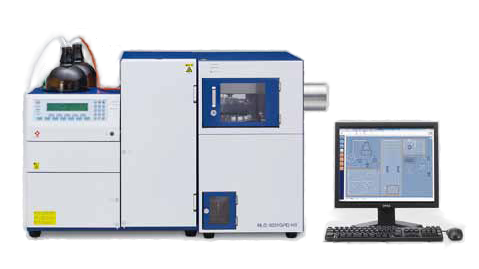
The TOSOH High Temperature Gel Permeation Chromatography (GPC) system is designed for accurate molecular weight and molecular weight distribution analysis of polymers that are insoluble in standard room-temperature solvents. This system is particularly suited for polyethylene (PE), polypropylene (PP), and other high-molecular-weight or highly crystalline polymers, providing reliable data even under challenging conditions.
High-temperature conditions and TCB & DMSO solvents:
To achieve dissolution of these otherwise intractable polymers, the system employs 1,2,4-Trichlorobenzene (TCB), a high-boiling-point solvent (~214 °C), or DMSO, allowing samples to remain dissolved at 160 °C, the standard testing temperature. The columns and sample injection system are also heated to this temperature to ensure complete dissolution and manageable sample viscosity.
Features:
| Solvent | TCB, DMSO |
|---|---|
| Sample Preparation | Filtered through 0.2 μm membrane before testing |
| Molecular Weight (Mw) Range | 1,000–1,000,000 Da |
| Suitable Samples | Polymerization mixtures, block copolymers, random copolymers |
| Sample Injection Volume | 300 μL |
| Sample Volume | Minimum 3.5 mL |
| Flow Rate | Approx. 1 mL/min (adjustable) |
| Temperature | 40–160 ℃ |
2. Principle
High Temperature GPC separates polymer molecules based on hydrodynamic volume, which correlates with molecular weight. The sample is dissolved in TCB or DMST at 160 °C and injected into the column, where polymers elute according to their size. Larger molecules elute first, followed by smaller molecules. Detection is typically achieved using refractive index (RI) detectors, viscometers, or light scattering detectors.
Key points of the TOSOH high-temperature system:
- Operates at high temperatures (up to 175 °C) to maintain polymer solubility
- Uses TCB or DMSO as the solvent, which prevents polymer precipitation and ensures accurate measurement
- Capable of analyzing polymers insoluble at room temperature, such as PE and PP
3. Data Interpretation
The GPC system generates molecular weight distributions and related parameters:
- Number-average molecular weight (Mn)
- Weight-average molecular weight (Mw)
- Polydispersity index (PDI)
For high-temperature polymers:
- Ensure that the baseline is stable at the temperature before interpreting results.
- Monitor viscosity changes carefully, as highly crystalline polymers can increase system pressure.
- Calibration is typically performed using polystyrene standards, with adjustments for differences in hydrodynamic volume of PE, PP, or other polymers.
4. Example Applications
- Polyethylene (PE) analysis: Molecular weight distribution of high-density or ultra-high molecular weight PE.
- Polypropylene (PP) characterization: Determining Mw, Mn, and PDI for isotactic or highly crystalline PP.
- High-molecular-weight polymer research: Analysis of specialty polymers that are insoluble in standard solvents, including blends and copolymers.
- Quality control in polymer production: Ensuring consistent polymer properties for industrial applications.