
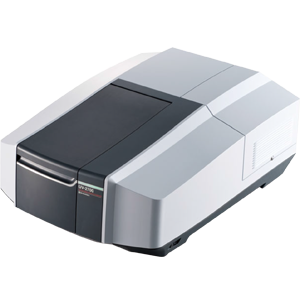
 1. Overview
The Shimadzu UV-2600 is a high-performance, double-beam UV-Visible spectrophotometer designed for accurate and reliable analysis of liquids, solids, and gases. It offers a wide wavelength range, excellent baseline stability, and high sensitivity, making it suitable for routine analysis, research, and quality control in industries such as pharmaceuticals, food, environmental monitoring, and materials science.
Features:

2. Principle
The UV-2600 operates on the UV-Visible absorption spectroscopy principle. When a sample is exposed to ultraviolet or visible light, specific wavelengths are absorbed by the sample’s molecules, corresponding to electronic transitions. The spectrophotometer measures the intensity of transmitted light compared to a reference, calculating the absorbance using Beer–Lambert Law:

The double-beam design ensures compensation for light source fluctuations and enhances baseline stability.

3. Data Interpretation
Data collected by the UV-2600 is presented as absorbance vs. wavelength spectra. Key interpretation aspects include:
- Peak Identification: Absorption maxima correspond to specific molecular transitions.
- Quantification: Using the Beer–Lambert law, concentration can be calculated from absorbance at a specific wavelength.
- Baseline Correction: Automatic baseline adjustment removes background noise.
- Kinetic Studies: Repeated measurements over time allow reaction rate monitoring.
- Derivative Spectra: Enhances resolution of overlapping peaks for complex mixtures.
4. Example Applications
- Pharmaceuticals: Determination of drug concentrations, assay validation, and impurity analysis.
- Food and Beverages: Measurement of vitamins, colorants, and antioxidants.
- Environmental Monitoring: Detection of heavy metals, nitrates, and organic pollutants in water.
- Materials Science: Characterization of polymers, dyes, and nanoparticles.
- Biochemistry: Protein and nucleic acid quantification, enzyme kinetics, and ligand binding studies.